Shift Work

Find your Rhythm

Keeping in sync

Many people, from factory workers and lorry drivers to cleaners, have irregular working hours. They keep things ticking over while everyone else is asleep. But working against your natural circadian rhythm can affect both physical and mental health. Resilience helps us cope with this – and it can be developed.

In shift systems, you’re often expected to perform when your body would normally be slowing down. At the same time, it’s important that you rest when others are just getting started for the day. Maintaining both physical and mental balance is key to staying healthy. It helps to be aware of stress and to understand your own needs here.
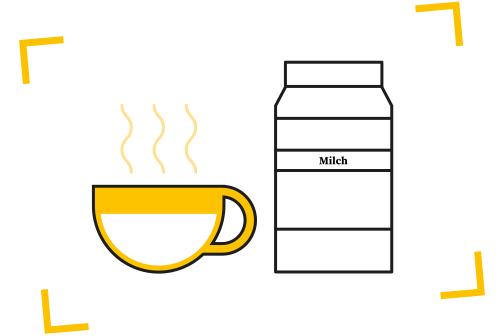
Warme Milch

Take care of yourself: Take intentional time for breaks and rest, spend time with family or friends or enjoy a walk outdoors. If switching off after work is difficult, small daily rituals can help – a warm drink of milk before bed, a quick walk around the block or a relaxation exercise. Whatever works for you.

Take care of yourself: Take intentional time for breaks and rest, spend time with family or friends or enjoy a walk outdoors.

Good recovery between shifts

Whether it’s an early, late, or night shift, working unusual hours is no easy feat. Shift work means making adjustments all the time, which can even spill over into your personal life. At the same time, this flexibility has its perks too: free time during the day for running errands without queues, doctor’s appointments, administrative tasks or enjoying a quiet coffee away from the hustle and bustle.

In fact, being positive about shift work can actually make it easier to manage the physical and mental strains. Plan your free time alongside your shift schedule for the coming weeks. What tasks can you best handle on which days? Who can you meet and when? When will you have the energy for a day out, a short bike ride or a run in the park?

The important thing is that thinking about your next shift doesn’t take over your day. With good planning, sleep and rest can have their place alongside errands and spending time with family and friends. Around seven hours of sleep are needed for physical recovery. Sleep can also be split into several phases, but the main sleep period should last at least four hours.

Relaxed sleep

Ever feel exhausted but still can’t sleep, or wake up repeatedly through the night? Shift work can throw your body’s natural clock out of sync. Worrying about sleeping in or not having enough energy for the next shift adds even more pressure. Techniques that promote sleep can help you relax and unwind.

  • Try to stick to your normal sleep rhythm, for example by having multiple sleep phases. A power nap right your next shift can give you an extra boost.
  • Start your bedtime routine with consistent rituals: a warm shower, a cup of hot milk or tea, relaxing music or a good book.
  • If you’re worried about sleeping in, set two or three alarms a few minutes apart.
  • Practising relaxation and breathing exercises helps calm racing thoughts and promotes restful sleep.
Have you been severely restricted by psychological stress for several weeks? This may indicate an illness. Please do not hesitate to seek professional help. You are not alone!

Finding rhythm together

Social connections are especially important for strengthening our mental resilience. Being in touch with people we trust provides stability, reassurance, and confidence and helps us stay positive. Knowing you can count on others makes it easier to face challenges.

However, irregular working hours can make maintaining close connections difficult, sometimes resulting in you feeling left out. The good news is: even small shared activities and open conversations about wishes and needs bring people closer. Taking part in club activities or spending time with colleagues can also help you feel part of a group – as long as it suits your personal rhythm.

Further Articles

Keep track
Young Employees
Keep track
Living the moment
Mindfulness
Living the moment
Stay balanced
Exercise & relaxation
Stay balanced
Have an open ear
Relationships
Have an open ear
Take it easy
Coping with stress
Take it easy
Consciously enjoy your food
Nutrition
Consciously enjoy your food
Young Employees

Keep Track

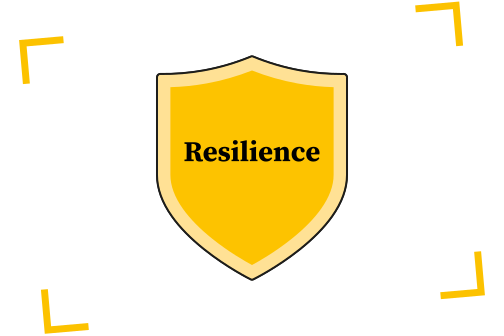
Stepping into your career with a protective shield

Starting out on your career path is definitely a challenge. You now have more responsibility for yourself. Are you feeling pressure to perform, time stress or uncertainty? Do your own high standards sometimes top what others are asking from you? Before you lose your head or your courage, take a step back and remember your strengths. Just as your body has an immune system, your mind has one too – your resilience. It’s already helped you overcome many challenges in life.

Resilience is the ability to stay on course during stressful times – think of it as your own protective shield. It’s not something we’re born with. We develop it throughout life by experiencing setbacks and victories, making mistakes, taking responsibility and learning along the way. Your protective shield has been well tried and tested. You can trust it.

Of course, things don’t always go to plan. It’s perfectly normal to feel stressed when exams are coming up, new projects are on the horizon or mistakes have been made. What matters is that you face the challenge and actively look for solutions. And if at any point everything becomes too much: take care of yourself! Having the ability to take a breather and reach out for support is a strength, not a weakness.

Positive mindset

Doubting yourself, comparing yourself to others, getting frustrated over mistakes – these are all very human responses. When these things happen, it’s helpful to see them in a positive light more often. Positive thinking not only makes you happier, but can also boost your career success. Because optimists believe in themselves more, they also inspire their colleagues and managers.

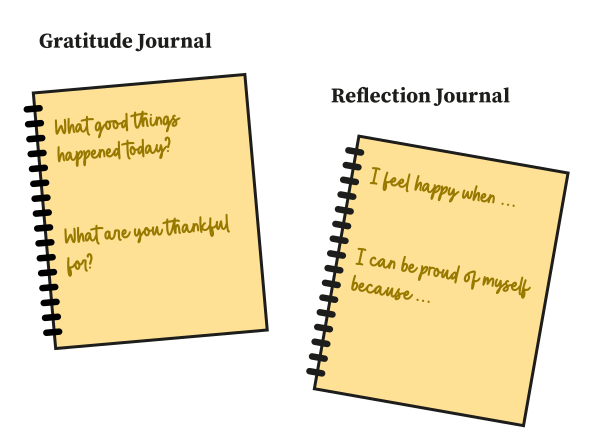
Of course, you don’t have to celebrate every single day. But you can intentionally cultivate a different mindset. One effective approach is journalling. Writing your thoughts down each day lets you see your successes clearly on paper.

Having a good work-life balance is important – for both your physical and mental health.

Making time for you

Work takes up a large part of the day and sometimes, friends and hobbies have to take a back seat. Having a good work-life balance is important – for both your physical and mental health.

Unwind

Reading an interesting book or listening to music you enjoy helps you escape daily stress and look at things differently.

Digital detox

Spending some time in the real world helps you feel grounded in the present.

Connect

Chatting with colleagues, catching up with friends or spending time with family fosters a sense of belonging.

Move

Even half an hour of cycling or brisk walking noticeably reduces stress and can easily fit into your commute.

Eat well

Eating a variety of fresh foods fuels your body and mind for the day.

Get enough sleep

Seven to eight hours of sleep recharge your energy and boost performance.

Overcoming challenges

Mistakes happen, schedules change and new challenges come up. Sometimes things don’t go as planned, no matter how well you do your job. Feeling uncomfortable in these situations is normal. Don’t be afraid to own up to mistakes, delegate tasks ask for support, or even say no sometimes. These are signs of responsibility and smart self-management. Stress management and relaxation techniques can be trained. Your company health insurance fund supports certified prevention courses, available locally or online. You can find the full range of courses here: course search

Have you been severely restricted by psychological stress for several weeks? This may indicate an illness. Please do not hesitate to seek professional help. You are not alone!

Further Articles

Find your Rhythm
Shift Work
Find your Rhythm
Living the moment
Mindfulness
Living the moment
Stay balanced
Exercise & relaxation
Stay balanced
Have an open ear
Relationships
Have an open ear
Consciously enjoy your food
Nutrition
Consciously enjoy your food
Exercise & relaxation

Stay balanced

Create a balance

Our mental immune system, known as resilience, helps us to cope with everyday life. It thrives when there is a constant balance between movement and relaxation. Alternating between tension and relaxation is key to well-being, motivation and performance.

Exercise stimulates blood circulation and metabolism, helps to reduce stress hormones and releases feel-good hormones. At the same time, it distracts us from everyday life and provides a feeling of liberation. Taking breaks and time to relax is just as important for resting the body and mind and recharging the batteries.

The more energised we are, the more large and small breaks we need to take. What provides the best balance depends on our everyday lives: People who exercise a lot can relax on the sofa afterwards – those who spend a lot of time sitting, on the other hand, tend to get recharged from movement.

Have you been severely restricted by psychological stress for several weeks? This may indicate an illness. Please do not hesitate to seek professional help. You are not alone!

Exercise

Humans are designed to move: Our 650 muscles and 206 bones need to be used regularly to ensure we feel our best. This keeps you physically and mentally fit, making it harder for illnesses to take hold.

Just half an hour’s brisk walking, on the way home for example, provides noticeably beneficial results. Climbing stairs or taking short exercise breaks in between gets the circulation going and relieves tension. Endurance sports such as cycling, jogging or swimming refresh the mind, improve concentration and lift the mood. 

Starting anything is hard at first. Begin by integrating short bursts of exercise into your everyday life: more trips on foot, errands by bike, take a walk in the evening. Getting some exercise actually helps you feel less exhausted after work and take your mind off things.

Just half an hour’s brisk walking, on the way home for example, provides noticeably beneficial results.

Relaxation

Relaxing is not just a nice luxury, but provides necessary balance in everyday life, preventing mental and physical exhaustion. So working breaks into your routine is worth it. They should be part of a healthy everyday life since they prevent you from becoming exhausted and give you strength for new tasks.

For example, taking lunch in the canteen instead of at your desk or going for a walk in the fresh air not only creates physical distance from your work, this can change your mindset in a short space of time and help you come up with new ideas. Even taking small breaks in between working on intense tasks have a similar effect – so stand up briefly or lean back for a moment.

Although you have many duties to attend to, don’t forget to make time for your hobbies. It’s best to plan fixed times for this when you don’t allow distractions. This is also helpful advice when it comes to the longest relaxation phase of the day – sleep. We need seven to nine hours of sleep every day so that the brain can process experiences, create new connections and carry out “maintenance”.

Exercises to do in between work

Stretching and sprawling out

After an hour of sitting, your body needs a quick movement break. Standing up briefly to stretch and sprawl out like you do after waking up can give you a noticeable amount of energy back. If your eyes feel tired, you can look for a point in the distance to concentrate on for a few seconds.

Autogenic training

If you feel the need to relax a little, sit down comfortably, close your eyes and let your mind wander through your body: “My arms are relaxed and are getting heavy. My shoulders are heavy and are hanging down loosely.” You can then bring movement back into your body by circling your hands and shoulders.

Progressive muscle relaxation

Tensing individual muscle groups one after the other and then slowly releasing them again relieves tension and reduces stress. The best place to start is with the feet.
 
We encourage participation in certified exercise and relaxation courses, which can take place both online and in person. You can have a look at the offers to choose from at the bottom of this page.

Further Articles

Have an open ear
Relationships
Have an open ear
Take it easy
Coping with stress
Take it easy
Consciously enjoy your food
Nutrition
Consciously enjoy your food
Keep track
Young Employees
Keep track
Find your Rhythm
Shift Work
Find your Rhythm
Living in the moment
Mindfulness
Living in the moment